The Future of Design, Manufacturing & Automation — Powered by Artificial Intelligence
Why Mechanical Engineers Need AI Skills Now?
South Africa’s manufacturing sector is undergoing a massive digital transformation. Industry 4.0 is no longer a buzzword — it’s the new baseline. Research from North-West University confirms that mechanical engineers who don’t upskill in AI, data analytics, and digital technologies face massive retrenchment risk within 3–4 years . The gap between a traditional engineer and an “I4.0 engineer” is widening fast — and employers are paying a premium for those who bridge it
Companies are actively replacing roles that lack digital competency. But they’re desperate to hire and retain engineers who can work with intelligent machines, digital twins, predictive maintenance systems, and automated design tools.
Why Study AI in Mechanical Engineering?
The Traditional Mechanical Engineering Landscape is Changing Fast
Let’s be honest: relying solely on legacy CAD tools, basic spreadsheets, and standard FEA (Finite Element Analysis) isn’t enough anymore. Across South Africa—from the manufacturing plants in Gauteng to the maritime industries in Durban—companies are actively hunting for engineers who understand smart data.
If you aren’t upgrading your skillset to include automated optimization, predictive asset maintenance, and Python-based modeling, you risk capping your career growth.
The Good News: You don’t need a 4-year Computer Science degree to bridge the gap. You just need an engineering-focused roadmap
Artificial Intelligence is revolutionizing the engineering industry by improving efficiency, reducing operational costs, and automating complex processes. Mechanical engineers with AI skills are highly sought after in industries such as:
- Manufacturing
- Automotive Engineering
- Robotics
- Aerospace
- Mining
- Industrial Automation
- Renewable Energy
- Smart Infrastructure
What You Will Learn in AI For Mechanical Engineering
Module 1: AI Fundamentals for Engineers
-
Machine learning vs. deep learning — what matters for your work
-
Python for mechanical engineers (no prior coding required)
-
Data preprocessing for sensor data, FEA results, and manufacturing metrics
Module 2: Predictive Maintenance & Condition Monitoring
-
Build ML models that predict equipment failure before it happens
-
Vibration analysis using AI
-
Real-world case studies from South African mining and manufacturing
Module 3: Generative Design & Topology Optimization
-
AI-driven design exploration beyond traditional CAD
-
Using tools like Autodesk Fusion 360 AI, nTopology, and open-source alternatives
-
Designing for additive manufacturing (3D printing) with AI assistance
Module 4: Digital Twins & Simulation
-
Create virtual replicas of physical systems
-
Real-time performance optimization
-
Integrating IoT sensor data with simulation models
Module 5: Robotics & Automation
-
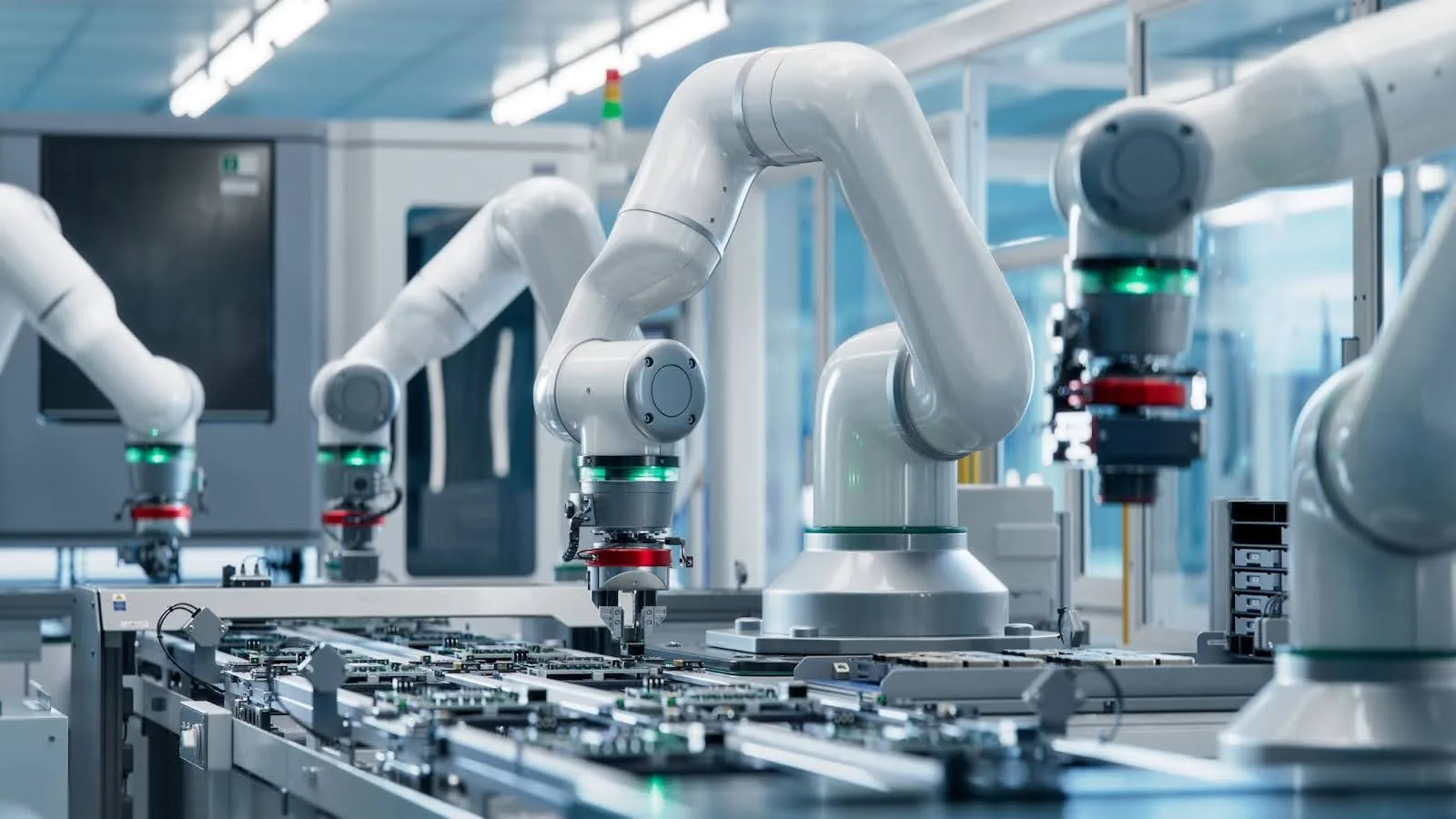
Programming collaborative robots (cobots) with AI vision
-
Automated quality inspection using computer vision
-
Human-machine interaction design
Module 6: Industry 4.0 Integration
-
Smart factory architecture
-
Data analytics for process optimization
-
Cybersecurity basics for connected manufacturing systems
Who AI For Mechanical Engineering Is For?
✅ Recent Engineering Graduates struggling to find roles without digital skills
✅ CAD Technicians & Design Engineers wanting to move into AI-driven design
✅ Manufacturing Engineers responsible for production optimization
✅ Maintenance Engineers looking to implement predictive maintenance
✅ Engineering Managers who need to lead digital transformation initiatives
What Our Students Say
“I was a traditional design engineer at a mining equipment supplier. Six months after completing this course, I was leading the company’s digital twin initiative. My salary increased by 40%.” — Thabo M., Pretoria
“The predictive maintenance project I built during the course was immediately applicable to my factory. I presented it to management and got promoted to Industry 4.0 Lead.” — Sarah K., Cape Town
“I had zero coding experience. The instructors made Python feel accessible, and now I’m automating FEA workflows that used to take days.” — Johan V., Durban
Your Career After This Course
-
AI Mechanical Engineer
-
Digital Twin Specialist
-
Predictive Maintenance Engineer
-
Smart Manufacturing Engineer
-
Generative Design Engineer
-
Robotics & Automation Engineer
-
Industry 4.0 Consultant
-
Mining & Minerals Processing
-
Automotive Manufacturing
-
Aerospace & Defense
-
Renewable Energy
-
Food & Beverage Processing
-
Oil & Gas
-
Consulting Firms
Frequently Asked Questions
Course Features
- Lecture 0
- Quiz 0
- Duration 80 hours
- Skill level All levels
- Language English
- Students 45
- Assessments Yes
- 2 Sections
- 0 Lessons
- 10 Weeks
- Section 10
- Section 20